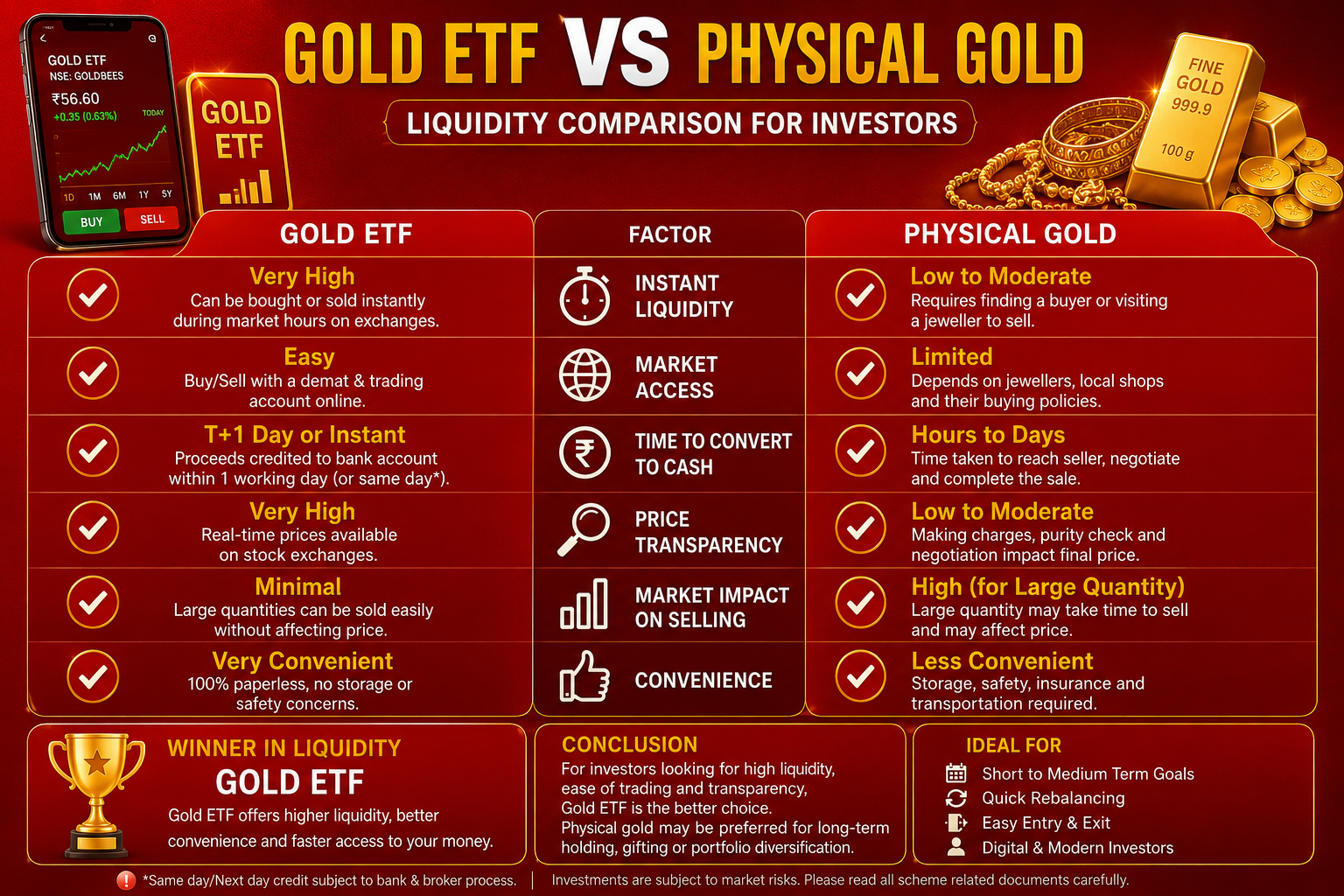
Gold ETF vs Physical Gold: What Investors Need to Know About Liquidity
Gold has long been considered a reliable investment and a hedge against inflation. Today, investors can gain exposure to gold in two primary ways: buying physical gold, such as coins and jewelry, or investing in Gold Exchange-Traded Funds (ETFs). While both options offer the potential benefits of gold ownership, liquidity is a key factor that investors should consider before making a decision.
Understanding Liquidity
Liquidity refers to how quickly and easily an asset can be converted into cash without significantly affecting its value. A highly liquid asset can be sold rapidly at a fair market price, while less liquid assets may require more time, effort, or costs to sell.
What Are Gold ETFs?
Gold ETFs are investment funds that track the price of gold and are traded on stock exchanges, similar to shares. Investors do not physically own gold; instead, they own units representing a specific amount of gold held by the fund.
Liquidity Advantages of Gold ETFs
Easy Trading: Gold ETFs can be bought and sold during market hours through a brokerage account.
Quick Settlement: Transactions are processed electronically, allowing investors to access funds relatively quickly.
Transparent Pricing: ETF prices closely track the market value of gold, making it easier to determine a fair selling price.
Lower Transaction Costs: Investors generally avoid making charges, storage costs, and purity verification fees associated with physical gold.
What Is Physical Gold?
Physical gold includes gold jewelry, coins, bars, and bullion purchased from dealers, banks, or jewelers. Investors directly own the asset and can store it themselves or use professional storage services.
Liquidity Challenges of Physical Gold
Finding a Buyer: Selling physical gold often requires locating a dealer, jeweler, or private buyer.
Purity Verification: Buyers may require testing and certification before completing a purchase.
Price Negotiation: The selling price may vary depending on market conditions, dealer margins, and gold purity.
Additional Costs: Making charges on jewelry and storage expenses can reduce overall returns.
+------------------------+-----------------------------+---------------------------+
| Factor | Gold ETF | Physical Gold |
+------------------------+-----------------------------+---------------------------+
| Ease of Selling | High | Moderate |
+------------------------+-----------------------------+---------------------------+
| Time to Liquidate | Minutes during market hours | Hours to days |
+------------------------+-----------------------------+---------------------------+
| Pricing Transparency | High | Varies by buyer |
+------------------------+-----------------------------+---------------------------+
| Transaction Costs | Generally low | Can be higher |
+------------------------+-----------------------------+---------------------------+
| Storage Requirements | None for investors | Required |
+------------------------+-----------------------------+---------------------------+
| Market Accessibility | Stock exchange | Dealers, jewelers, buyers |
+------------------------+-----------------------------+---------------------------+
Which Option Is Better for Liquidity?
For investors who prioritize quick access to cash, Gold ETFs generally offer superior liquidity. They can be sold instantly during trading hours, and pricing is transparent and market-driven.
Physical gold, on the other hand, provides tangible ownership and may appeal to investors seeking long-term wealth preservation. However, converting physical gold into cash often involves additional steps, verification processes, and potential price negotiations.
you're referring to Prime Gold Hub, it is a gold-buying and gold-loan release platform operating in parts of India. The company states that it helps customers sell gold and release pledged gold from banks and lenders, with services available across Andhra Pradesh, Telangana, and Tamil Nadu.
Services Offered
Gold selling assistance
Release of pledged gold
Doorstep support in some locations
Bank transfer and UPI payment options
Gold valuation services
Final Thoughts
Both Gold ETFs and physical gold have their place in a diversified investment portfolio. If liquidity is your primary concern, Gold ETFs are typically the more convenient and efficient choice. However, investors who value direct ownership and the security of holding a tangible asset may prefer physical gold despite its relatively lower liquidity.
Before investing, consider your financial goals, investment horizon, risk tolerance, and need for quick access to funds. A balanced approach that includes both forms of gold may provide the benefits of liquidity as well as long-term wealth protection.
Tags